

Exhibition Details
An Ecology of Quilts: The Natural History of American Textiles brings together approximately 30 examples, spanning the 18th to 20th centuries, from the Museum’s rich collection of more than 600 quilts and presents them from an ecological perspective, tracing patterns of relationships between the environment and traditional quilting practices.
This groundbreaking exploration of the natural history of American textiles proposes an eco-critical inquiry into the many facets of global material culture that emerged in the early American republic through the 20th century.
This groundbreaking exploration of the natural history of American textiles proposes an eco-critical inquiry into the many facets of global material culture that emerged in the early American republic through the 20th century.
Additional Details
Looking beyond the quiltmaker, An Ecology of Quilts is centered around the origins of textile production and how it informs the artistry of quiltmaking, exploring the environmental and social impact of cultivating and harvesting raw materials; the networks of overland and ocean trade required to transport dyestuffs, fibers, and fabrics; and the technologies and industrial techniques developed to process them, such as the cotton gin—all of which allowed quiltmaking to flourish as a quintessential American art form.
As An Ecology of Quilts documents, textiles represent an intricately woven web of environmental resources, craft and scientific knowledge, global movement, and creative collaboration. Speaking not only to the work of individual American quilters but also to the contributions of countless artisans and laborers around the globe, quilts survive as powerful material metaphors for human relationships and entanglements within the natural world.
As An Ecology of Quilts documents, textiles represent an intricately woven web of environmental resources, craft and scientific knowledge, global movement, and creative collaboration. Speaking not only to the work of individual American quilters but also to the contributions of countless artisans and laborers around the globe, quilts survive as powerful material metaphors for human relationships and entanglements within the natural world.
Location
American Folk Art Museum
2 Lincoln Square
New York, NY 10023
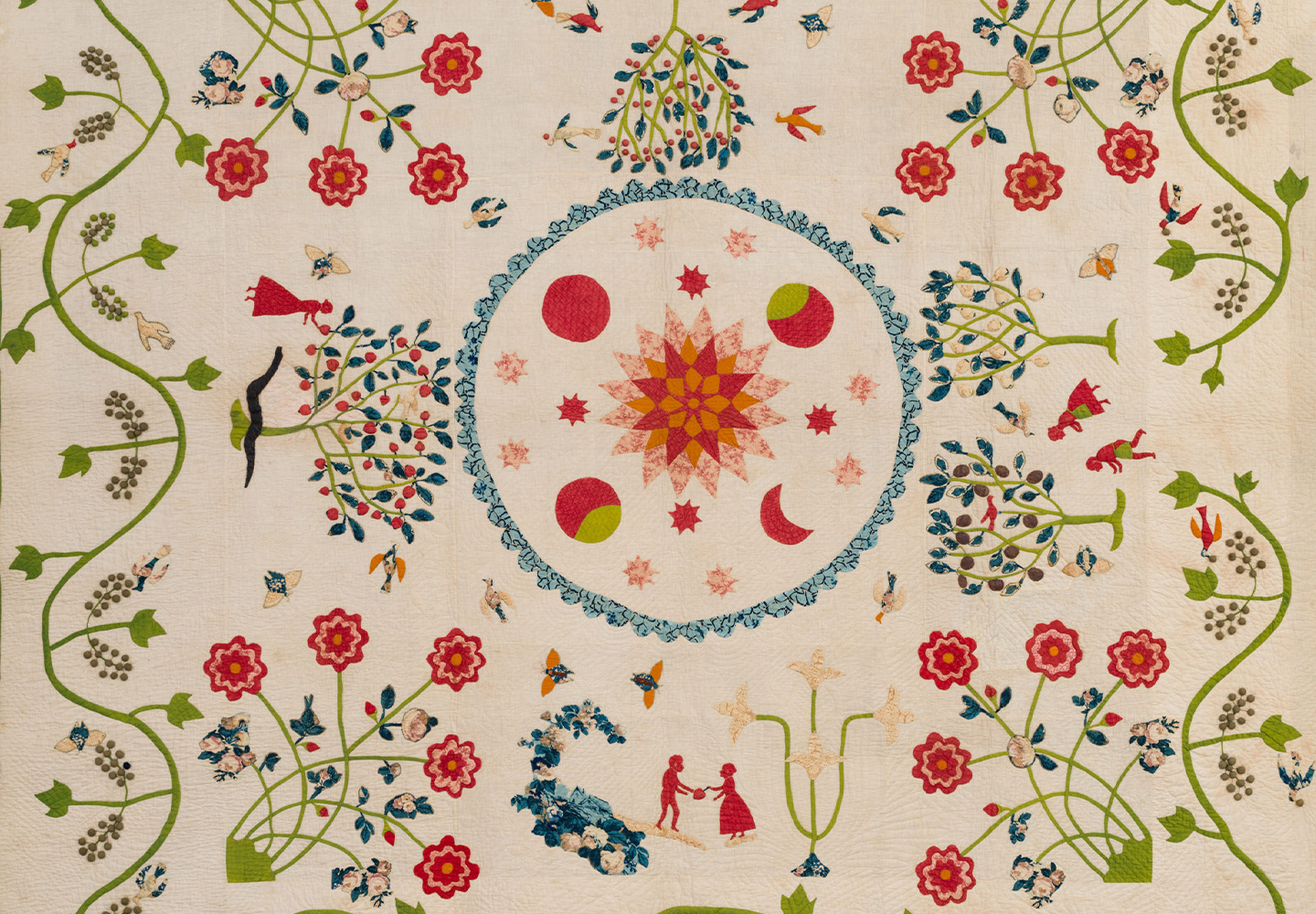
Image: Adam and Eve in the Garden of Eden Quilt; Attributed to a member of the Sinclair Family / courtesy of American Folk Art Museum