

Exhibition Details
In Hinduism, the act of darshan, or “seeing god,” is central to worship. This intimate exchange between deity and devotee traditionally takes place in the temple. But within each home is also a shrine, dedicated to that householder’s chosen deity.
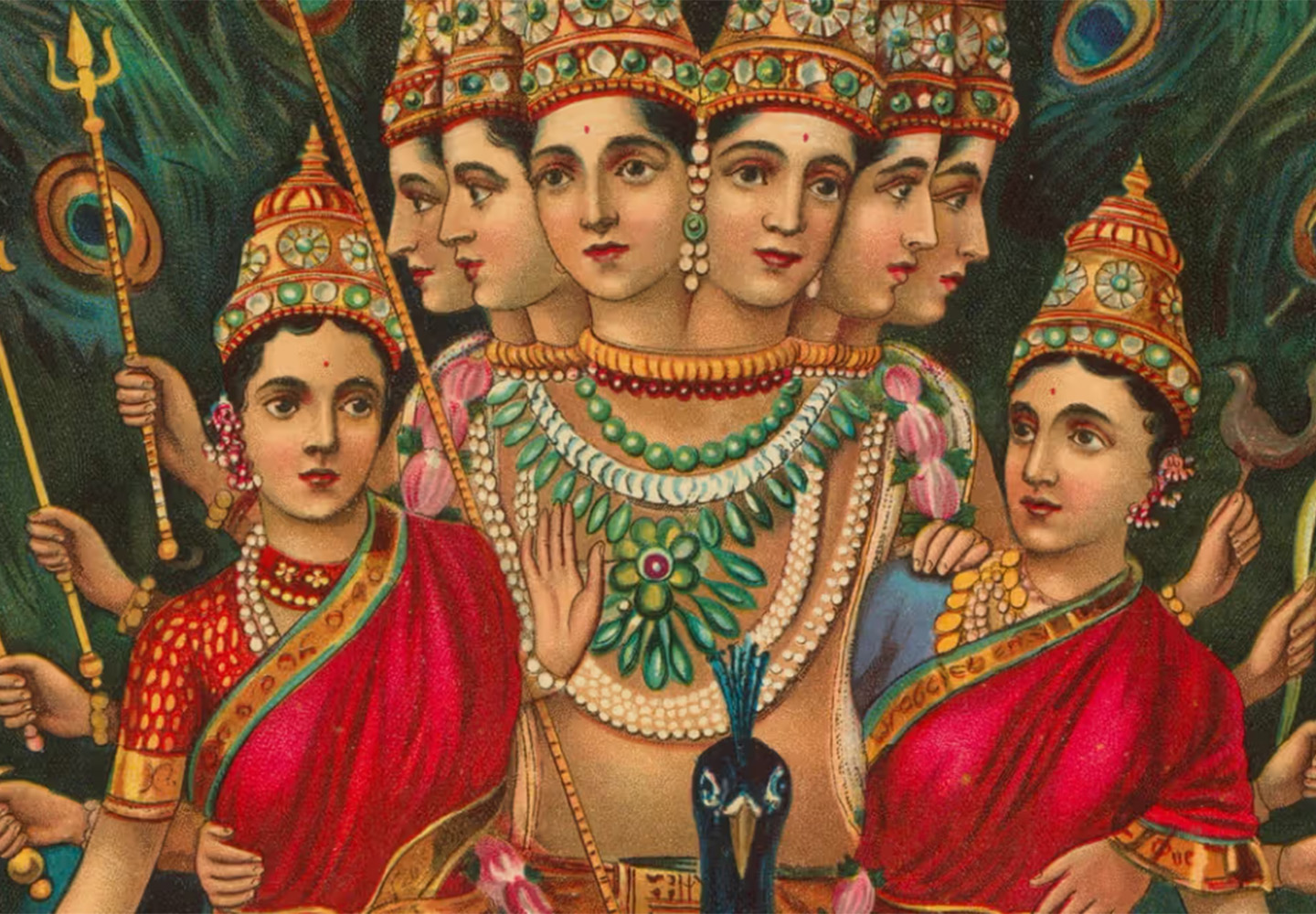
The need to display an image of the divine in the home was traditionally fulfilled by small icons made of clay or metal. In the mid-19th century, new technologies were introduced into India, first photography and then the chromolithographic press. The latter permitted the production of inexpensive prints of the Hindu gods for mass consumption. These proved immensely popular and for the first time in India, even the humblest home could afford a colorful icon of their chosen god to display in the household shrine.
The need to display an image of the divine in the home was traditionally fulfilled by small icons made of clay or metal. In the mid-19th century, new technologies were introduced into India, first photography and then the chromolithographic press. The latter permitted the production of inexpensive prints of the Hindu gods for mass consumption. These proved immensely popular and for the first time in India, even the humblest home could afford a colorful icon of their chosen god to display in the household shrine.
Additional Details
Household Gods: Hindu Devotional Prints, 1860–1930 presents the first encyclopedic exhibition of these chromolithographic prints from the pioneering studio presses of Calcutta (Kolkata), Poona (Pune), and Bombay (Mumbai). These mass-produced prints became a powerful means of expressing Indian religious identity at a time when the country was experiencing the first stirrings of the Independence movement.
Featuring approximately 120 works, shown in four rotations, from The Met’s collection of chromolithographic prints, along with paintings and portable triptych shrines, Household Gods provides a unique window on the vibrant tradition of Indian devotional imagery on the cusp of modernity.
Featuring approximately 120 works, shown in four rotations, from The Met’s collection of chromolithographic prints, along with paintings and portable triptych shrines, Household Gods provides a unique window on the vibrant tradition of Indian devotional imagery on the cusp of modernity.
Location
The Metropolitan Museum of Art
Gallery 251
1000 5th Ave
New York, NY 10028
Image: Subramaniyan with his consorts Valli and Devasena (detail), Ravi Varma Press, c. 1900–1915, Color lithograph, varnish/ courtesy of The Metropolitan Museum of Art