

Exhibition details
Before the Schomburg Center for Research in Black Culture, there was the library of Arturo “Arthur” Schomburg: race man, bookworm, and scholar of the African diaspora. From his youth in Puerto Rico to his leading role in the Harlem Renaissance, Schomburg sought to “uncover and reveal to the world” knowledge about Black culture.
He built a collection that spanned five centuries and more than a hundred languages. Like other Black bibliophiles who turned their parlors into libraries, Schomburg welcomed visitors to his home, where he encouraged them to settle in and “peep at the books.”
He built a collection that spanned five centuries and more than a hundred languages. Like other Black bibliophiles who turned their parlors into libraries, Schomburg welcomed visitors to his home, where he encouraged them to settle in and “peep at the books.”
Additional Details
In 1926, The New York Public Library purchased Schomburg’s 4,600 books, pamphlets, art, and manuscripts and placed them at the 135th Street Branch Library, a hub of Harlem’s creative and intellectual life. His collection planted a seed that grew into the millions of items now held by the Center.
Over time, however, Schomburg’s library became shrouded in mystery, because there was no surviving inventory of its contents. What was in the famed acquisition? For the past decade, the Center’s Home to Harlem team has been solving this enigma. Clue by clue, librarians, archivists, and scholars reconstructed a nearly complete record of Schomburg’s original collection.
Over time, however, Schomburg’s library became shrouded in mystery, because there was no surviving inventory of its contents. What was in the famed acquisition? For the past decade, the Center’s Home to Harlem team has been solving this enigma. Clue by clue, librarians, archivists, and scholars reconstructed a nearly complete record of Schomburg’s original collection.
Location
Schomburg Center for Research in Black Culture
Latimer/Edison Gallery
515 Malcolm X Blvd
New York, NY
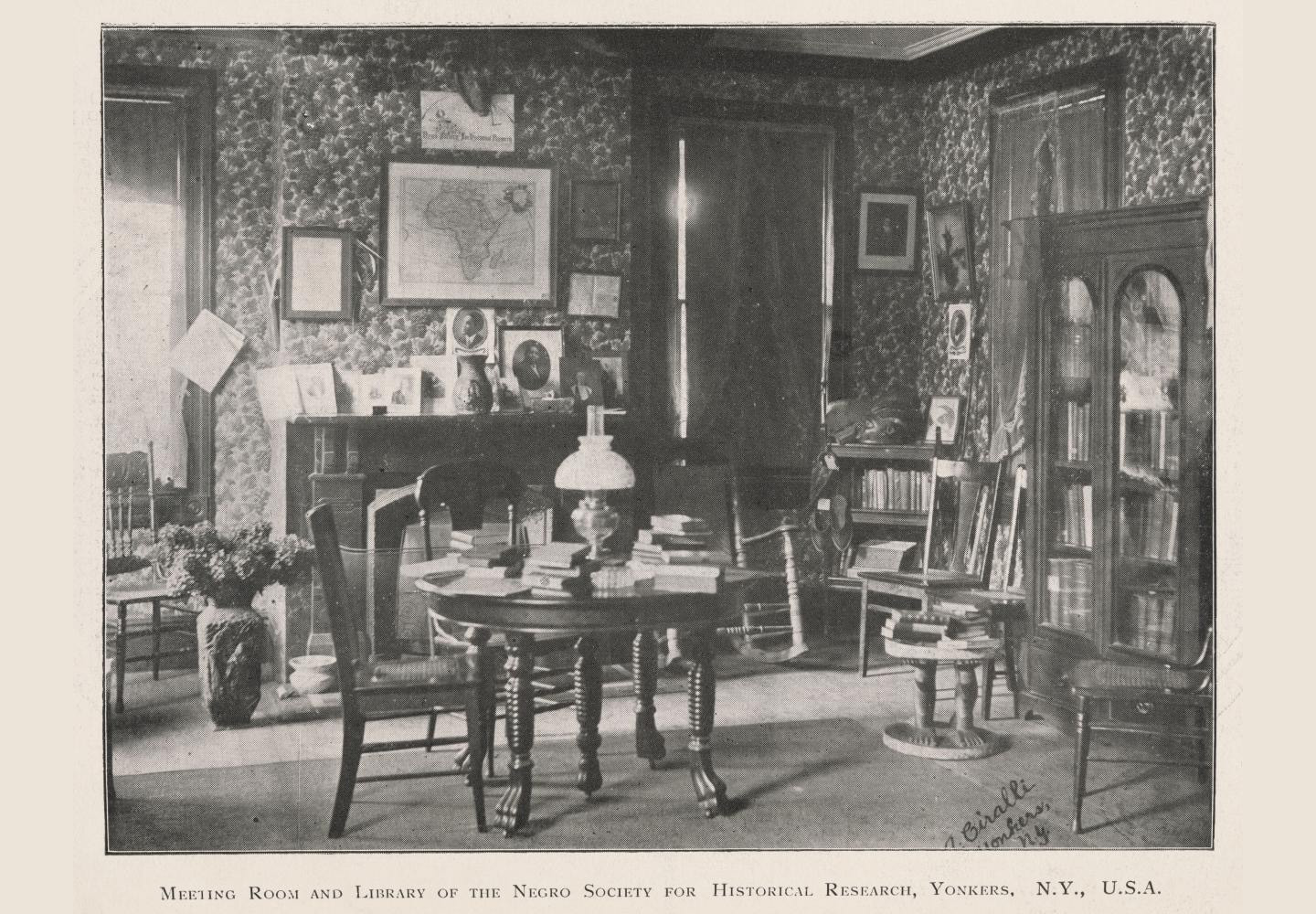
Image: Meeting room and Library of the Negro Society for Historical Research, ca.1912. Published in ‘African Times and Orient Review’, Christmas annual (1912) / photo b A. Ciralli / courtesy of New York Public Library