

About the 1986 Venice Biennale
In 1986, Isamu Noguchi became the first solo artist to represent the United States at the Venice Biennale with the provocative exhibition What Is Sculpture?. Selected by Commissioner Alanna Heiss (founder and director of MoMA PS1) and curated by Henry Geldzahler (former curator at the Metropolitan Museum of Art), it was Noguchi’s first major European presentation and confounded critics by challenging distinctions between art, design, and environment.
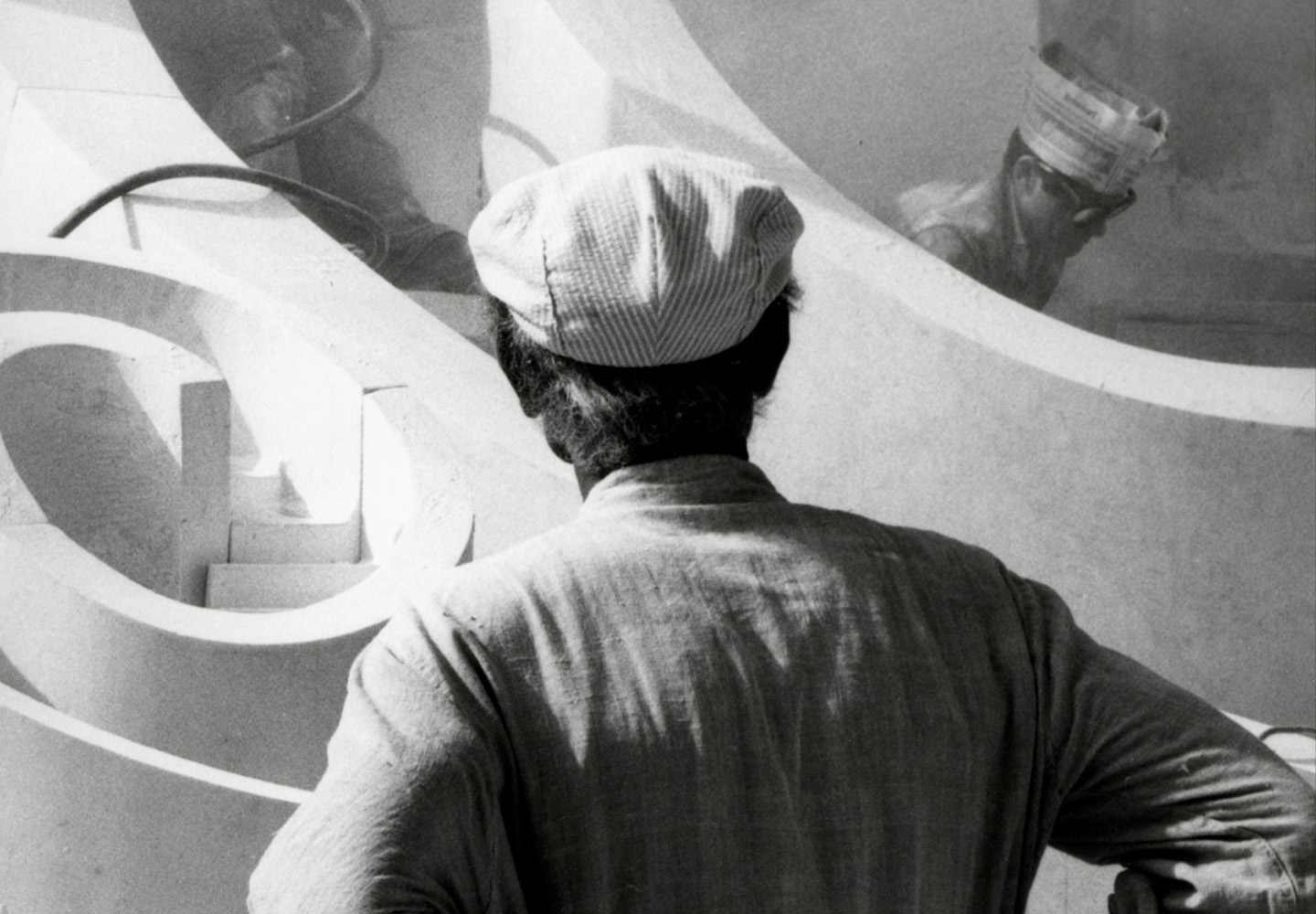
At its center was Slide Mantra, a ten-foot marble spiral slide installed in the U.S. Pavilion’s courtyard. This monumental sculpture embodied Noguchi’s decades-long commitment to play as an essential human experience, which he emphasized by displaying it alongside cast-bronze models of unrealized public playground proposals dating from the 1930s onward.
At its center was Slide Mantra, a ten-foot marble spiral slide installed in the U.S. Pavilion’s courtyard. This monumental sculpture embodied Noguchi’s decades-long commitment to play as an essential human experience, which he emphasized by displaying it alongside cast-bronze models of unrealized public playground proposals dating from the 1930s onward.
Exhibition details
Forty years later, Light and Stone revisits Noguchi’s visionary practice through archival photographs, architectural sketches, a model for Slide Mantra, and Akari. A selection of unrealized models for playgrounds and earthworks that Noguchi exhibited at the 1986 Biennale are also on view in Noguchi’s New York in the Museum’s second floor galleries.
Location
The Isamu Noguchi Foundation and Garden Museum
9-01 33rd Road (at Vernon Boulevard)
Long Island City, New York 11106
Image: Isamu Noguchi overseeing the carving of Slide Mantra for What is Sculpture?, Venice Biennale, June 29–September 28, 1986 / courtesy of the Noguchi Museum